something is missing (2022)
generative multimedia art installation

Microscope, Latex, Aluminium, Speakers
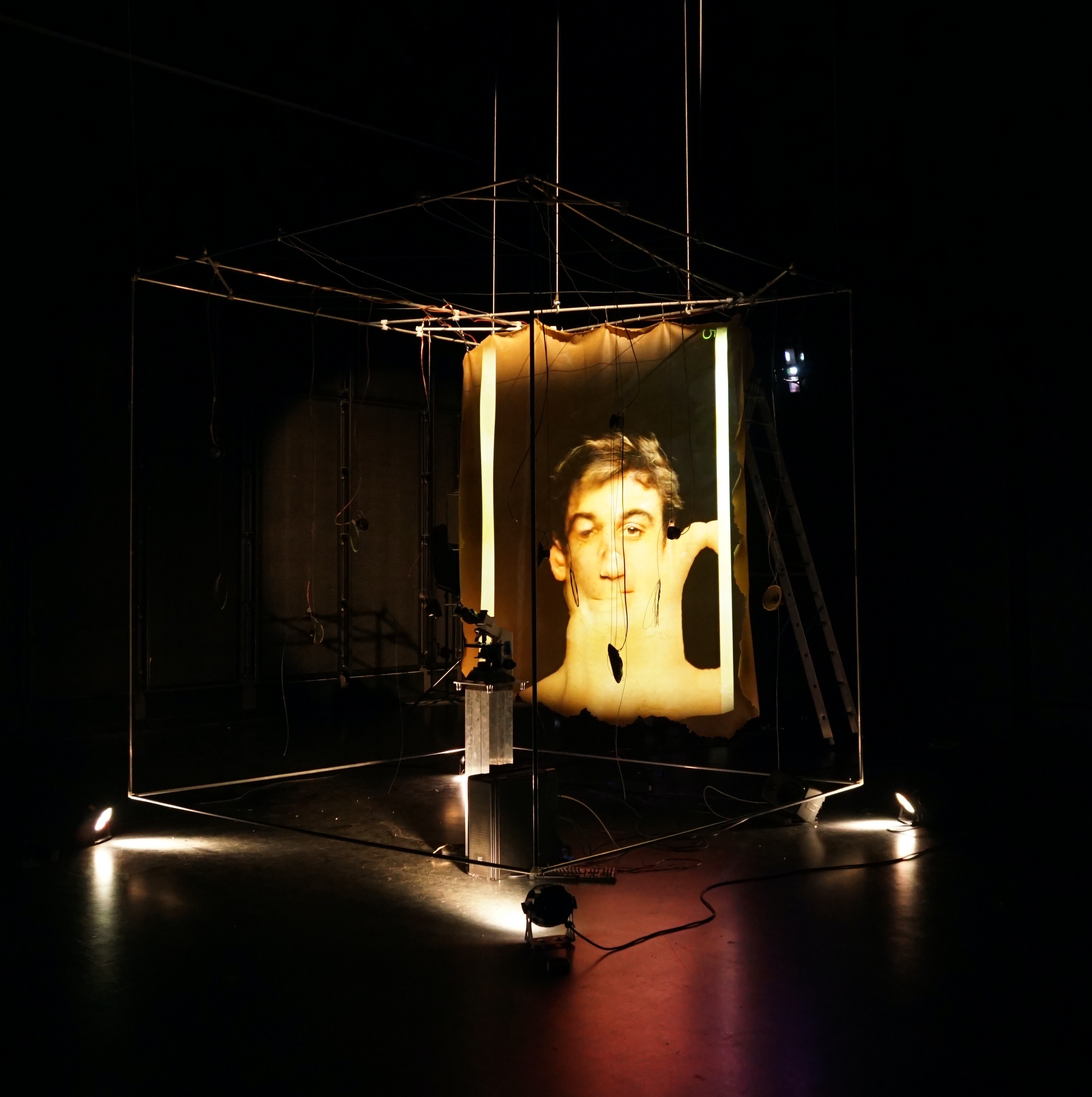
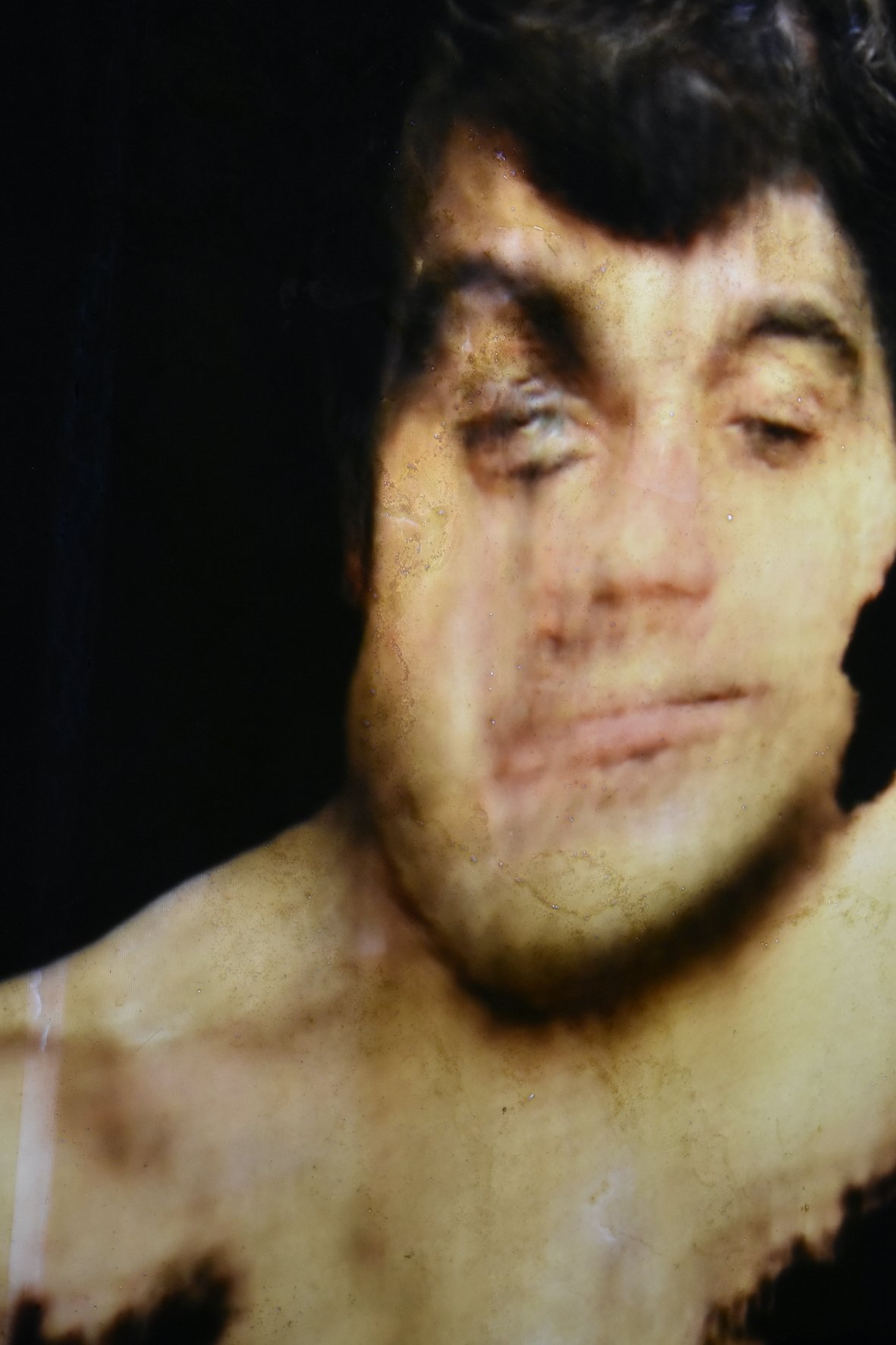
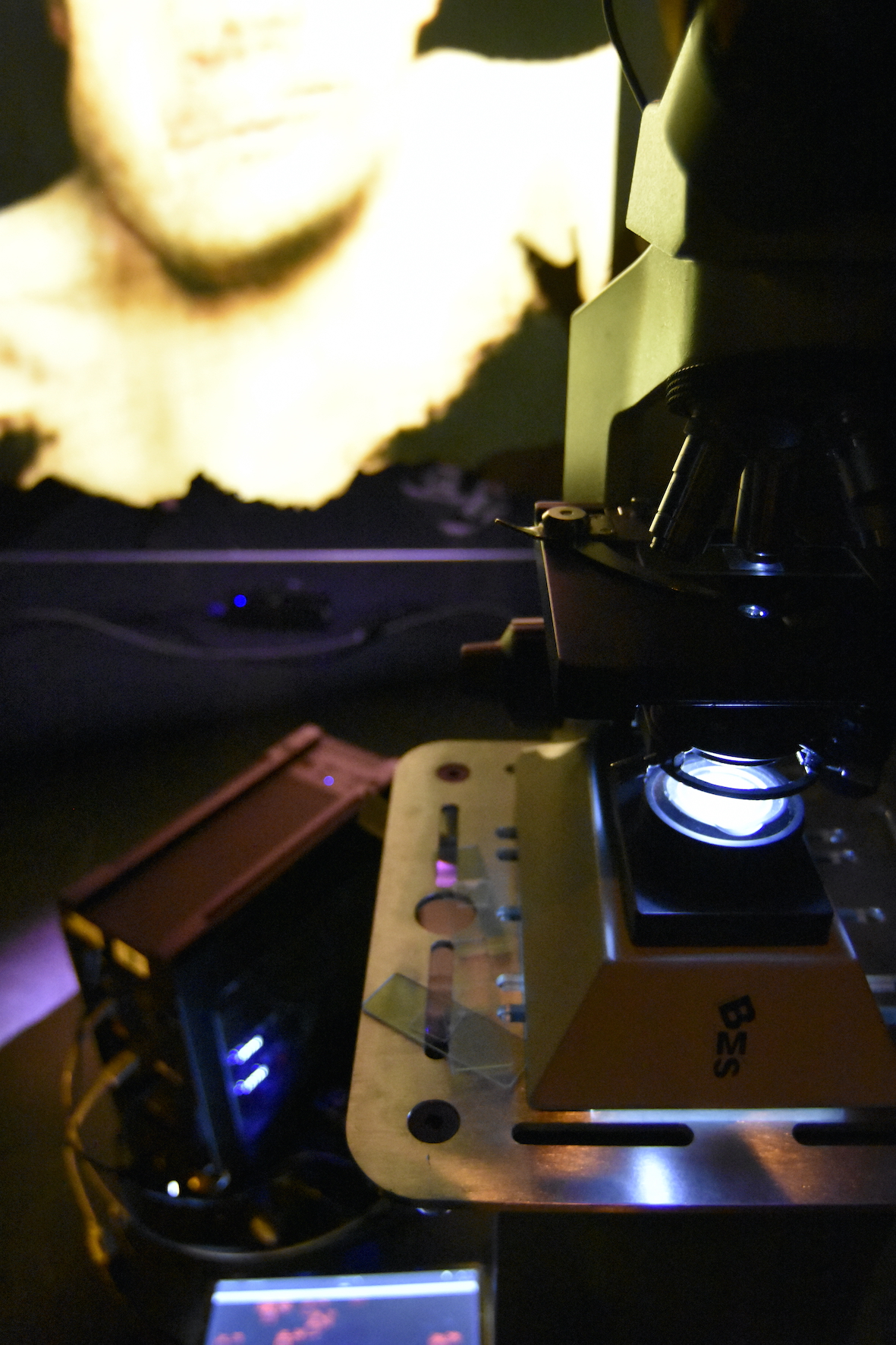
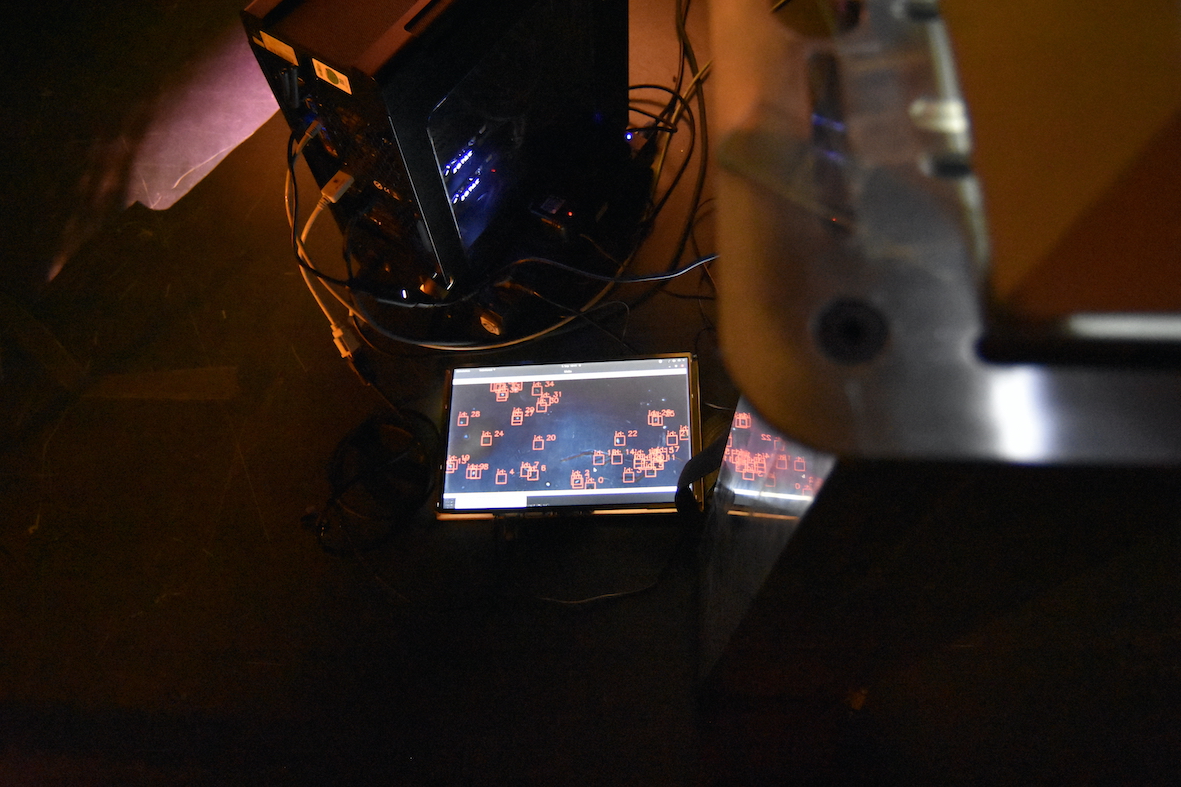
In the center of the dark room, a cube made of aluminum, the Bounding Box. Projected onto a stretched artificial skin used in prosthetics, portrait images of the artist Marco Kempf become dimly discernible. Onomatopoeic sounds are fanned out and fed back into the room from the body of the Bounding Box via a multi-part loudspeaker system. Marco Kempf translates the organic into the technical - individually recognized and tracked human germ cells become the starting point, the "seed", for audiovisual random processes that orchestrate themselves within. Each cell is different and carries different genetic information, and just as the reproductive process can lead to one of an infinite number of possible incarnations of a person, each successive iteration of "Something is missing" leads to an unpredictable outcome. To achieve this, a real-time analysis of the artist's germ cells takes place under a high-resolution microscope. Parameters such as quantity, mobility, and position are examined under the microscope using statistical methods of live image analysis. For the generation of the portraits, an AI model - a so-called Generative Adversarial Network (GAN) - was trained with self-portrait photos. For the auditory layer of the work, AI procedures were applied and used to generate dadaistic onomatopoeia. The AI applications seem to have learned the characteristic sound of my voice, whereas they fail on his rudimentary speech patterns such as intonation or prosody. In doing so, it creates a semi-autonomous, self-referential system that confronts questions of identity and the presence of corporeality.